
Service · Porcelain Tile
Porcelain Tile Printing in Dubai
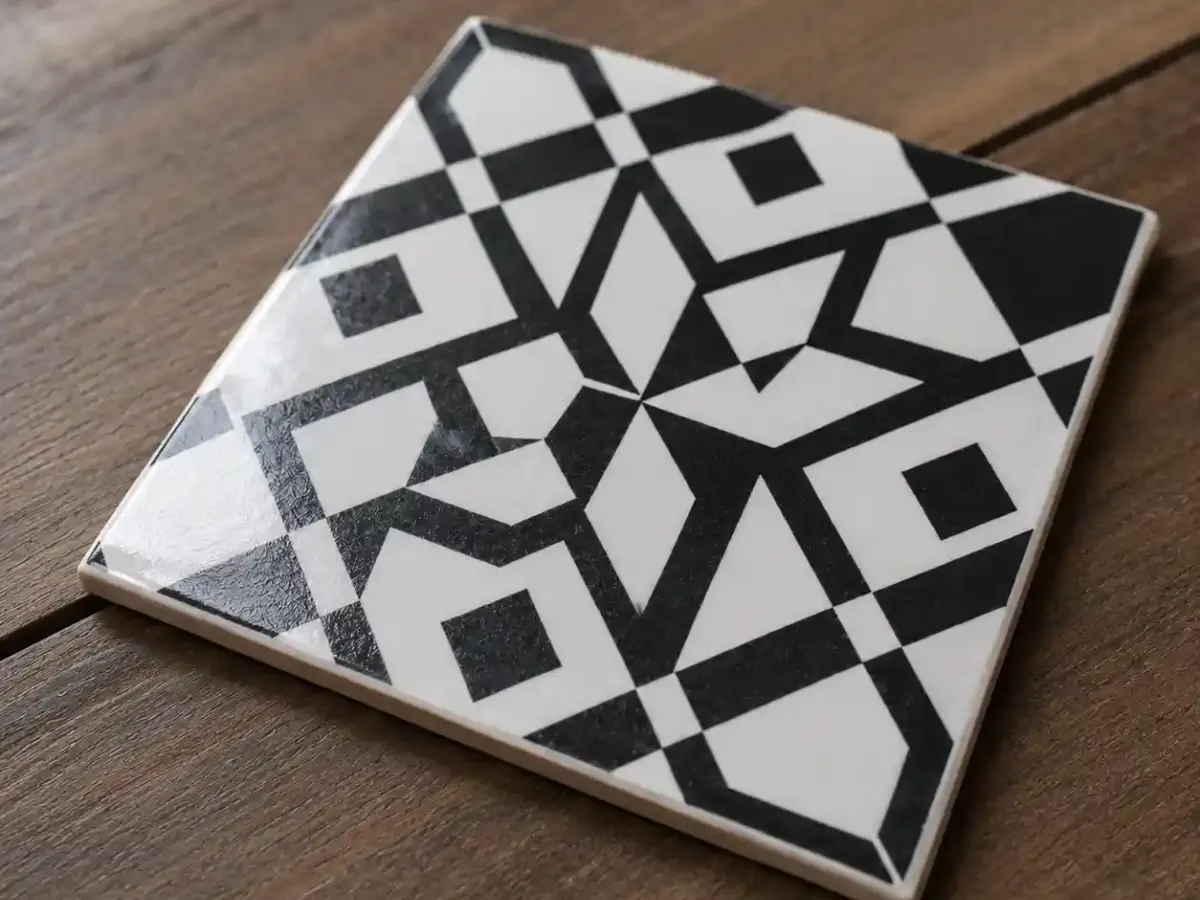
Matrix Tile Print hand screen-prints custom designs onto porcelain tiles and fires them in our own kiln at 800 to 900 degrees Celsius, fusing your photo, logo, or pattern into the glaze permanently. Porcelain is denser and less porous than standard ceramic, which is why it's the tile of choice for busy floors, wet areas, and outdoor spaces across Dubai and the wider UAE.
The basics
What is porcelain tile printing?
Porcelain tile printing is the process of hand screen-printing a custom design onto a fired, glazed porcelain tile and then re-firing it in a kiln so the pigment fuses permanently into the glaze. Porcelain itself is made from a finer, more refined clay (kaolin) blended with feldspar and silica, then fired at a much higher temperature than standard ceramic during manufacturing, which is what gives it its density.
That density shows up in two measurable numbers worth knowing before you choose a tile. Porcelain absorbs less than 0.5% of its weight in water, compared with 3% or more for standard ceramic. And porcelain typically carries a PEI rating (the industry scale for hardness and wear resistance) of 4 to 5, versus 0 to 3 for most ceramic tiles. In plain terms: porcelain is harder, less absorbent, and built to handle more daily wear than ceramic, which is exactly why it's the standard choice for floors, kitchens, bathrooms, and outdoor spaces in a hot, humid climate like Dubai's.
Water absorption
Porcelain absorbs less than 0.5% of its weight in water, compared with 3% or more for standard ceramic.
Hardness & wear
Porcelain typically carries a PEI rating (the industry scale for hardness and wear resistance) of 4 to 5, versus 0 to 3 for most ceramic tiles.
How we print on porcelain
We decorate the finished, glazed tile.
Your porcelain tile arrives already pressed, glazed, and fired at very high heat (roughly 1,200 to 1,370 degrees Celsius) during manufacturing, long before it reaches us. What we do is decorate that finished, glazed tile:
Share your design.
Send us the image, logo, or pattern along with the tile size and finish you have in mind.
Screen preparation.
We prepare a printing screen for each colour and layer of your design.
Hand screen printing.
Powder colour is pushed through the screen onto the glazed porcelain surface by hand, layer by layer.
Decorating kiln firing.
The tile is re-fired at 800 to 900 degrees Celsius, low enough to protect the porcelain body but hot enough to fuse the pigment permanently into the glaze.
Quality check and delivery.
Every tile is checked for colour consistency before it's packed and delivered anywhere in the UAE.
This is the same fuse-into-the-glaze approach used for hand-painted ceramic murals for generations, just applied with a screen instead of a brush. It's different from how most Dubai print shops handle porcelain, which is usually UV-cured ink or digital inkjet printing that cures a layer on top of the glaze rather than fusing into it. UV and digital printing are faster and cheaper for small runs, but the print sits on the surface, so it's more exposed to scratching and fading over years of use than a fired-in design.
Porcelain vs. ceramic
Which should you choose?
| Porcelain | Ceramic | |
|---|---|---|
| Water absorption | Under 0.5% | 3% or more |
| PEI rating (durability) | Typically 4 to 5 | Typically 0 to 3 |
| Best for | Floors, kitchens, bathrooms, outdoor and pool areas, high-traffic commercial spaces | Walls, backsplashes, and other low-moisture, low-traffic surfaces |
| Relative cost | Higher | Lower |
| Takes a printed design | Yes, hand screen-printed and kiln-fired the same way | Yes, hand screen-printed and kiln-fired the same way |
If you're printing a feature wall in a living room or a low-traffic hallway, ceramic is often the more affordable choice and prints just as well. If the tile is going on a floor, in a bathroom, kitchen, or anywhere it will see water, foot traffic, or the outdoors, porcelain is the safer long-term choice. Still not sure which fits your project? Contact us and tell us the room or space, and we'll recommend the right material before you order.
Floor or wall?
Where porcelain works best.
Floors.
Porcelain's low water absorption and higher PEI rating make it the standard choice for villa floors, hotel lobbies, retail floors, and kitchens, spaces that see constant foot traffic and the occasional spill.
Walls.
Yes, porcelain works on walls too, and large-format rectified porcelain (tiles with a precision-cut straight edge) is currently the preferred look for feature walls, since the tight grout lines give a near-seamless finish. Walls don't need the same slip resistance as floors, so both matte and polished printed finishes work well.
Outdoor and pool areas.
We print on outdoor and pool-deck porcelain finished to R11 or R12 anti-slip ratings under the DIN 51130 standard, the same rating system used for wet-area flooring internationally. A textured, matte finish gives grip even when the tile is wet, which matters around a villa pool in Dubai or a hotel deck in Abu Dhabi where the surface is rarely dry for long.
Tables and counters.
Porcelain's low porosity also makes it a hygienic, easy-to-wipe surface for restaurant tabletops and food-prep counters.
Finishes & sizes
What we print on.
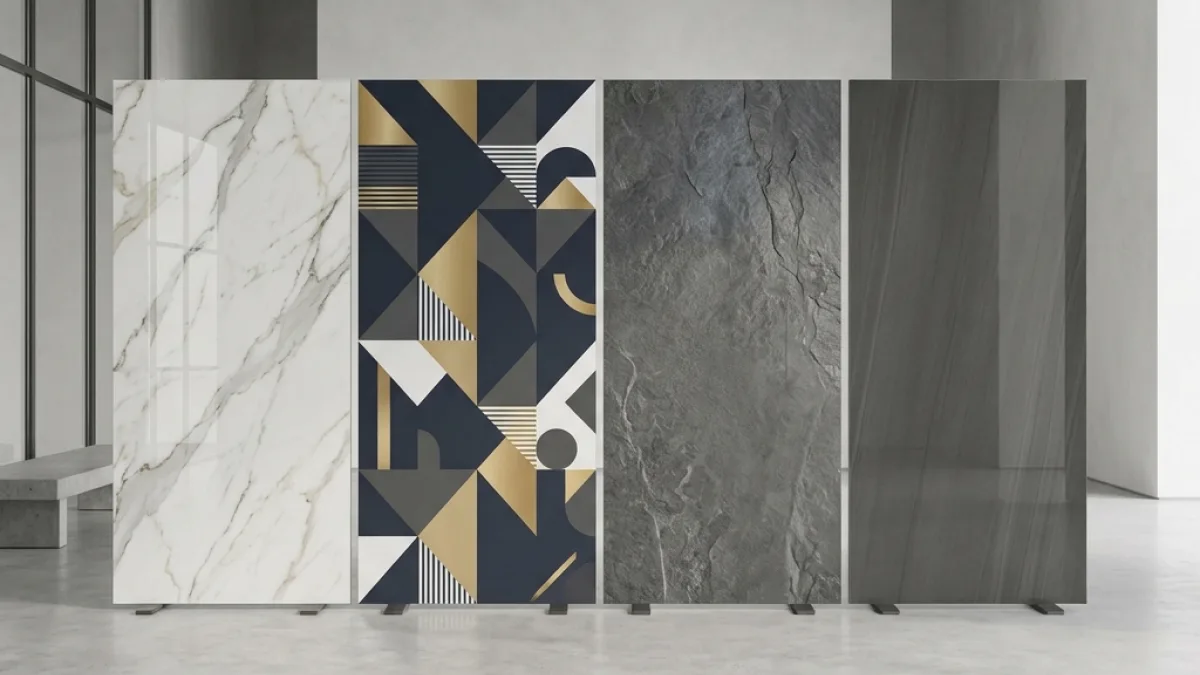
We print on matte and textured porcelain for anti-slip floors and pool decks, and on polished or glossy porcelain for feature walls and low-traffic surfaces where slip resistance matters less. We print and fire any size and any quantity, from large-format rectified slabs to small runs. Tell us your project's tile size when you get in touch and we'll confirm it can be printed and fired at that format.
Pricing
How much does porcelain tile printing cost in Dubai?
Porcelain tile pricing in the UAE depends on format, finish, and quantity. As general market context, not a confirmed Matrix quote:
| Format | General UAE Market Range (estimate) |
|---|---|
| Standard 60x60cm porcelain (unprinted base cost) | AED 40 to 65 per sqm |
| Mid-range polished porcelain | AED 65 to 120 per sqm |
| Large-format rectified porcelain (60x120cm+) | AED 100 to 180 per sqm |
| Outdoor/anti-slip porcelain paver | Typically priced at a premium over standard indoor finishes |
Why choose us
Why choose Matrix for porcelain.
Our own kiln, our own quality control.
We fire every porcelain tile ourselves at a temperature calibrated to fuse the design into the glaze without stressing the porcelain body underneath. Nothing is outsourced to a third-party printer.
Hand screen-printed, not just surface-cured.
Because the pigment fuses into the glaze rather than sitting on top of it, our porcelain prints hold up to scrubbing, foot traffic, and UAE sun better than UV or digitally printed alternatives.
Indoor and outdoor capability.
From a bathroom feature wall to an anti-slip pool deck, we print porcelain for both indoor and outdoor use.
Large-format handling.
We print and fire any size, so your feature wall or floor can use fewer, larger tiles for a cleaner, more seamless look.
Areas we serve
Delivered across the UAE.
Matrix Tile Print prints, fires, and delivers porcelain tiles across all seven emirates from our facility. Within Dubai, we regularly deliver to Al Quoz, Business Bay, Downtown Dubai, Jumeirah, Dubai Marina, Deira, Al Barsha, and Arabian Ranches, along with villa communities and hotel and retail fit-outs across the city.
Porcelain's low water absorption matters more in the UAE than in milder climates. Between direct summer sun, high humidity, and salt air along the coast in Sharjah, Ajman, and Fujairah, a poorly chosen tile can fade, crack, or absorb moisture within a couple of years. Because porcelain is dense and our designs are kiln-fired into the glaze rather than sitting on top of it, printed porcelain holds its colour and structure whether it's on a shaded villa floor in Al Ain or an open pool deck in Dubai Marina.
FAQ
Porcelain printing questions.
For floors, wet areas, and outdoor or high-traffic spaces, yes. Porcelain absorbs less water (under 0.5% versus 3%+ for ceramic) and typically carries a higher PEI durability rating. For low-traffic walls, ceramic is often the more affordable choice and performs just as well.
Both. Porcelain works well on walls, and large-format rectified porcelain is currently a popular choice for feature walls because of its near-seamless grout lines. Floors benefit most from porcelain's durability and low water absorption, but walls take a printed design equally well.
Yes. We print on anti-slip porcelain finished to R11 or R12 under the DIN 51130 standard, suited to pool decks, outdoor patios, and other wet, high-traffic exterior areas.
We print and fire any size and any quantity. Tell us your project's required tile size and we'll confirm it before you order.
It depends on the finish, not the printing. Polished porcelain is naturally smoother and better suited to walls or low-traffic areas. Matte and textured finishes, including our R11/R12-rated outdoor options, are designed to grip even when wet.
No. We print onto the glazed surface and re-fire at a temperature that fuses the design into the glaze without affecting the porcelain body's density or water absorption.
Both take a hand screen-printed design well. Matte and textured finishes are the better choice for floors and any area that gets wet, since they offer more grip. Polished finishes suit walls and decorative surfaces where slip resistance isn't a concern.
Cost depends on tile format, finish, and quantity. See the pricing table above for general UAE market ranges, and contact us for an exact quote based on your project.